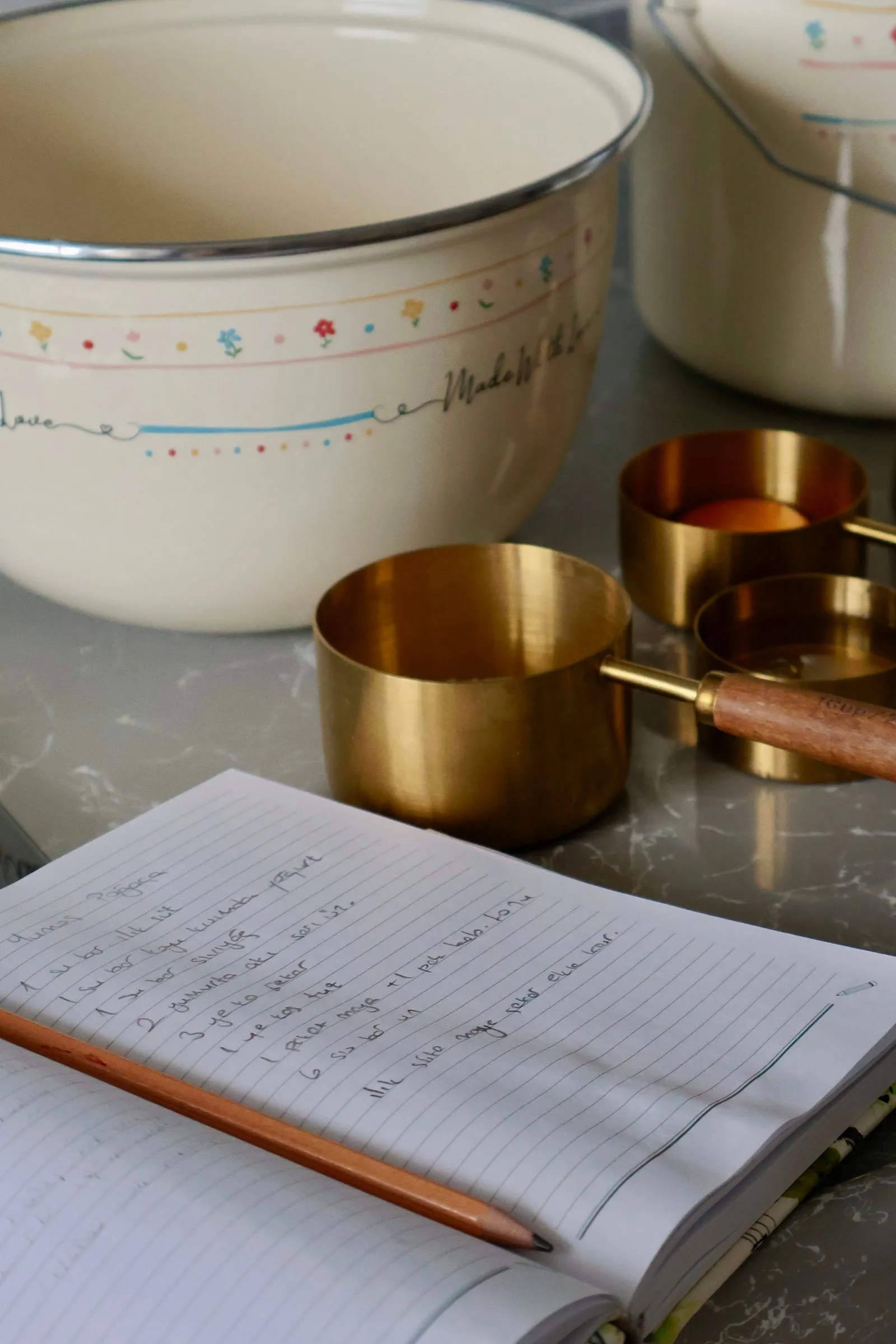
Every cooking website in the world runs on a silent civil war: the American recipes ask for “a cup of flour,” and the measuring jug in your drawer only speaks milliliters. Neither one has apologized, and dinner is waiting.
The translation is actually one number. A US cup is 237 ml, so a liter is 4 and a bit cups — 4.227, if you’re the kind of person who measures bitterness. Round it to four cups and you’re fine for anything that involves a pot. Keep the splash for the batter’s sake.
The parts people trip over: a cup of water and a cup of flour do not weigh the same, because volume and weight are different hobbies. That’s why pastries get cursed at. And the cup itself has regional accents — the US cup is 237 ml, the UK one is about 284, which is exactly the sort of betrayal the rest of the recipe was hoping to avoid.
In everyday money: 250 ml of milk is about a cup plus a tablespoon. A 330 ml can of anything is roughly 1.4 cups, close enough to make the recipe shrug. If a recipe asks for 2 cups of water, that’s a bit under half a liter. If it asks for 1.5 cups of broth, that’s about 355 ml, which is also known as the height of a beer can, a coincidence cooks have been exploiting for years.
When the recipe and the jug refuse to cooperate, the liters to cups converter does the exact math, and the cups to liters version gets you home. For the smaller, more anxious amounts — the tablespoons, the splashes — the milliliters to fluid ounces and its fluid ounces to milliliters pair cover the medicine-cup end of the spectrum.
And when you’re really done guessing, the volume converter shows every unit it owns at once — ml, cups, pints, gallons, the whole drawbridge. One number in, every answer out.
Bottom line: the cup habit isn’t science, it’s history, and it’s not going anywhere. So translate, don’t fight it. You’ll bake better things, and the measuring jug will finally stop judging you.
Hero photo: Pexels.